Conrad Gagnon
Honors English 9 Yellows
10 October 12
In the author Saki's short stories "The Interlopers" and "The Open Window", both stories have a dark and chilling tone, with an ironic and somewhat grizzly ending. In "The Open Window", Saki clinches the story with the phrase "Romance at short notice was her speciality." The whole story about the men dying from the bog, and the aunt being in a delusional and pitiful state of denial was merely a ruse to get Mr. Nuttel out of the house. In a similar manner, "The Interlopers" ends with a terribly chilling phrase— "Wolves." In this ironic and macabre twist of fate, Ulrich and Georg's new found friendship is cut short, as they are presumably eaten alive by wolves, helpless and trapped under the weight of the tree. Both stories have an ironic ending and a beautifully dark tone, displaying the symbolism of the darkness of life, truth, and the fickle hands of fate.
Wednesday, October 10, 2012

Friday, September 28, 2012
Don't Forget To Lock The Door.
Conrad G
September 28th, 2012
Honors English 9 Yellows
After coming home
late from the office one night, I opened the door quietly and went to the
bedroom, as not to wake my sleeping wife
and child. I lie next to my wife and fell asleep. Later in the night, I heard
my son walk in. "Dad," he whispered, "there's someone in my
room." I turned on the light in the hallway, and followed him into his
room. I turned on the light. "See Leo? Nothing to be afraid of!" I
said as I smiled warmly. He gave me a nervous
look, and went back to bed. I woke up the next morning to my alarm clock
blaring, as any other morning might begin. Being late October, the sun had yet
to come up at my ,waking hour, since I had an hour and a half commute to my day
job. I walked over to the door to flick on the light switch. What I then saw in
the light was horrific. My lovely wife was a ghostly pale grey, spotted with
the dark crimson shade of dried blood. Her beautiful face, once full of life
and happiness, was dead and stained with an expression of utter fear. Her
gorgeous eyes, once bright and young, now dull and looking off into the
distance. Her neck was slit open jaggedly, as if ripped by some gruesome
monster. When I pulled off the covers, I found that she her torso had been
flayed open, not by a knife but with a superior amount of brute force. Her
chest cavity was hollow: her heart and been removed. Unlike the rest of the
mutilation, her heart looked as if it was removed very carefully. A note was
left folded where her heart once was. In black ink it read "Don't forget
to lock the door." I ran to Leo's room, my heart pounding in adrenaline. I
hit the light switch and ripped off the covers. "LEO!" I screamed,
praying that this was a dream, just a nightmare, and that it wasn't real, that
this wasn't actually happening. This can't be
real, I thought. In a moment I'll wake
up, Paige will be next to me, and I'll go off to work, and she'll drive Leo off
to school. But it wasn't so. Nothing but a note lie in the bed where my
beloved son, my only son, Leo, once slept in his peaceful childhood bliss and
oblivion. I unfolded the note, my hands trembling. "I saved the little piggy for later." I turned around
to run downstairs and call 911. I saw the glowing red eyes peering out from the
closet with malevolence, smiling with its teeth sharp like doctors needles. But
I didn't see it soon enough.
This story was well
written because it provides suspense, lulls you into a false sense of security,
before shocking and scaring you.
Thursday, September 27, 2012
IT
Conrad Gagnon
September 27th, 2012
Honors English 9 Yellows
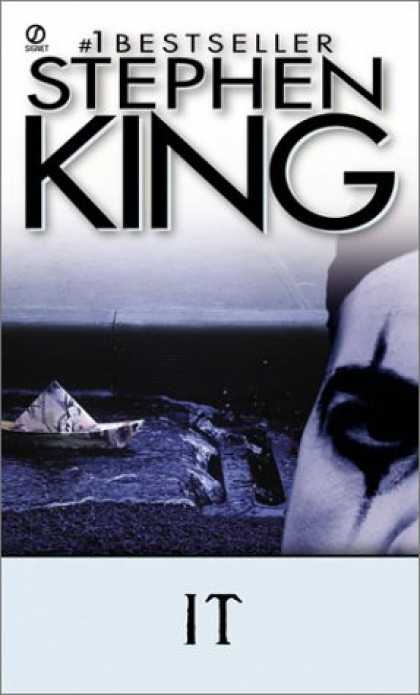
 For my reflection book this quarter, I chose It by Stephen King. The main character of this book is a young Seattle boy named George. Throughout the book, George and his friends are terrorized by "It" into their adulthood. "It" uses the fears of the characters against them before it preys upon them. I chose this book because I have previously enjoyed Stephen King's other books, such as Pet Semetary and The Dark Tower series. http://www.coverbrowser.com/image/stephen-king-books/17-2.jpg
September 27th, 2012
Honors English 9 Yellows

Homelessness, The Solution of
Conrad Gagnon
Honors
9- Yellows
20
September 2012
Homelessness
The Solution of
If you could, would you live without
rules and debt, without having to serve anyone else? This is how many homeless
people see their lifestyle choice. Some homeless people would rather remain
homeless than get jobs, due to an ongoing problem with themselves or others, or
an overly rebellious will against the system. They may have escaped from an
awful situation, and would rather spend a life on the street than deal with
their past. Some may have wanted to release themselves from the structure and
servitude of daily life, and would rather leech off hardworking citizens than
work for their money.
In the early 1980’s homelessness became
a large problem in America. Pictures in the media of people living on the
streets of cities shocked citizens (Facts). Some politicians even slept in the
street so they could empathize with homeless Americans (Facts). In the 1990’s,
the horror and shock of this tragedy had worn out. It was more of a nuisance
than large problem. Beggars became increasingly more difficult to deal with,
and even though jobs were available, many people still remained on the streets
(Facts).Homelessness is when a person does not have standard housing unit, and
does not have the normal amenities we all have, such as bathrooms, showers,
beds, air conditioning, heating, and trash cans (Rossi). But what clearly
defines homelessness? Is living in a car homeless? What about a motel room, or
in an abandoned building? Is that homelessness? The line between homed and
homeless may not be as fine as we had thought it was. Going by the “normal”
definition of someone who is homeless (not having a home complete with working
plumbing and other standard amenities), the U.S. Census Bureau estimated that
the number of homeless people in America is between 600,000 and 900,000 people
in the 1990’s (Rossi). HUD says that in January of 2007, 666,295 people spent
the night on the street on average. In January of 2005, 754,147 people were
considered homeless (Rossi).The homeless population is so large, they have
begun to develop their own language and dialect (Hambrick).
Mental illness, drug and alcohol
addiction, unemployment, and a violent or abusive home life are all problems
that cause homelessness, in adults or children (Grolier). Some Americans
believe these unfortunates should be moved far away from largely populated
areas such as business and tourist areas. This idea is backed by many civilian
votes (Facts). Is this the true way to deal with homeless people though? Just
moving them around? If they are unruly, then yes, they should be moved. But is
it really the correct decision to move someone less fortunate with force?
Another way people deal with the homeless population is with caring and
kindness, but this has its own problem: leeching. A person lives off of other
people, in a parasitic fashion similar to that of a leech. If you supply a
homeless person with amenities such as money, they may abuse the gift with
drugs, or grow accustomed to merely begging for money instead of working.
Cities with large populations often have deployed “Street Support Teams” and
areas for homeless people to sleep. These “Street Support Teams” give homeless
people medicine, food, therapy, and other amenities (Hambrick). Some teams
provide electricity. Some homeless people even have televisions and free
electricity (Hambrick).
A lot of homeless people are trying to
escape the rules of others, in an extreme form of a rebellious attitude. They
refuse to go to shelters because and do not wish to integrate themselves back
into the working society (Hambrick). Drug addiction is also a large problem in
the homeless life. Though drug use is in decline, it is still a major problem
(Hambrick). Homelessness is now a standard part of any largely populated area.
Police are provided with training on how to attend to the homeless and those
who complain about them. Police will often pick up homeless individuals and give
them things that will help them, such as shelter and contact with housing and
job providers, along with social security providers (Hambrick). Most homeless
people will leave after they are released, but some may use these recourses
they have been provided with (Hambrick). Many cities have used auditoriums,
gyms, and armories into shelters for homeless people. Sadly, many homeless
people find that the street is a safer place to stay than a shelter, as many
homeless shelter-goers will rob other sleeping civilians, and the noise is just
too much for some other homeless people (Grolier).
Homeless is not always by choice though.
Some other things that cause homelessness are unemployment or a low pay rate,
which causes individuals or entire families to lose their homes (Grolier).
Prison reentry and military release are also causes of homelessness.
Astonishingly, only 18% of the homeless population are chronically homeless
(Rossi). Someone who is chronically homeless has either been homeless for more
than a year or has been homeless at least four times in three years (Rossi).
Moe jobs that can be for an
affordable shelter and basic amenities are the only real way to cure
homelessness (Grolier). In the Chinatown and Pearl District of Portland, $46.9
million dollars were spent constructing an eight-story Homeless Service Center
(Epstein). It is located in a part of the city that has a large amount of
illegal activity in it, such as drug dealing (Epstein). Most shops and
residences that were once in the area have moved away, though some still remain
(Epstein). It has one hundred and thirty permanent private apartment style
rooms, ninety shelter beds, and enough offices to hold 50 employees (Epstein).
Haircuts, job training, and therapy will also be provided (Epstein). The goal
is for anyone who checks in to the facility to no longer be homeless once they
leave (Epstein). The director of nonprofit organization Doreen Binder says that
the mission of the Homeless Service Center is to "move people from the
streets into safe, secure, permanent housing. Once that housing is obtained,
[the organization] will continue working with each person to assure that they
retain that housing." (Epstein). Many other classes are available, such as
writing, yoga, art, and nutrition, to provide support for the homeless community
in a very stereotypical “Portlandian manner” (Epstein). The Portland Homeless
Service Center is a prime example of how homelessness should be dealt with.
Those who would like to integrate themselves back into the working society and
economy will, and those who only wish to leech will not survive very long in
the harsh life of homelessness.
Works Cited Page
Hambrick,
Ralph S., Jr., and Gary T. Johnson. "The Future of Homelessness."
Society. Sept./Oct. 1998:
28-37. SIRS Issues Researcher. Web. 06
Sep 2012.
"Homelessness."
Grolier Multimedia Encyclopedia. Grolier Online, 2012. Web. 10 Sept. 2012.
Rossi,
Peter H. "Homelessness." Encyclopedia Americana. Grolier Online,
2012. Web. 10 Sept. 2012
"Homelessness." Issues & Controversies On File: n. pag. Issues & Controversies. Facts On File News Services, 21 Feb. 1997. Web. 12 Sept. 2012.

Monday, September 10, 2012
Research Topic Ideas
- Reasons for child homelessness: Troubled home life is a greater cause than being born on the street.
- Pros: Interesting, intelligent, and useful.
- Cons: May be too simple.
- Drug dealing tactics.
- Pros: Interesting and controversial.
- Cons: Too controversial and illegal.
Wednesday, September 5, 2012
Conrad Gagnon
Honors English 9
Yellows
31 August 2012
In the books So B.
It by Sarah Weeks and Can't Get There
From Here by Todd Strasser, there are many similarities and differences. In
both books, the main characters are independent, persevering, and stubborn,
though in different ways. In So B. It,
Heidi is stubborn, because people keep telling her that she won't be able to
find her family, but she ignores them. In
Can't Get There From Here, Maybe is stubborn in a negative way. She
doesn't want to accept help from anyone, she wants to be "free and
independent", or maybe that's just what Maggot wants, and she's a
follower. Both characters have troubled home lives, but again, in different
ways, but this time also in similar ways. Heidi's mother is mentally disabled,
and her father left her family. Maybe's mother was an abusive alcoholic, and
her father also left her. Both stories have endings with mixed emotions. Maybe's
"Asphalt Tribe" is gone, but she is on to a new life. Heidi's mother
dies, but she is reunited with her family.
Conrad G.
Honors English 9 Yellows
31 August 2012
For my summer reading,
I read a book called Can't Get There From Here by Todd Strasser. In this book,
a group of homeless children who call themselves the "Asphalt Tribe"
struggle to survive in the harsh New York City winter. I chose this book because
I enjoy metaphorically putting myself into others' shoes, and gaining knowledge
and insight from their unique perspectives. The book describes troubled homes,
starvation, death, suicide, loneliness, and other negative emotions that may or
may not be relatable to some people. I enjoyed every aspect of the book, and
would highly recommend it. It is insightful and thought provoking.
Subscribe to:
Posts (Atom)